Retaining walls on hill plots: types, drainage and costly mistakes
Most retaining walls that fail around Nainital and Bhimtal fail in the monsoon, and most fail because of water. Which wall suits your slope and how to drain it.

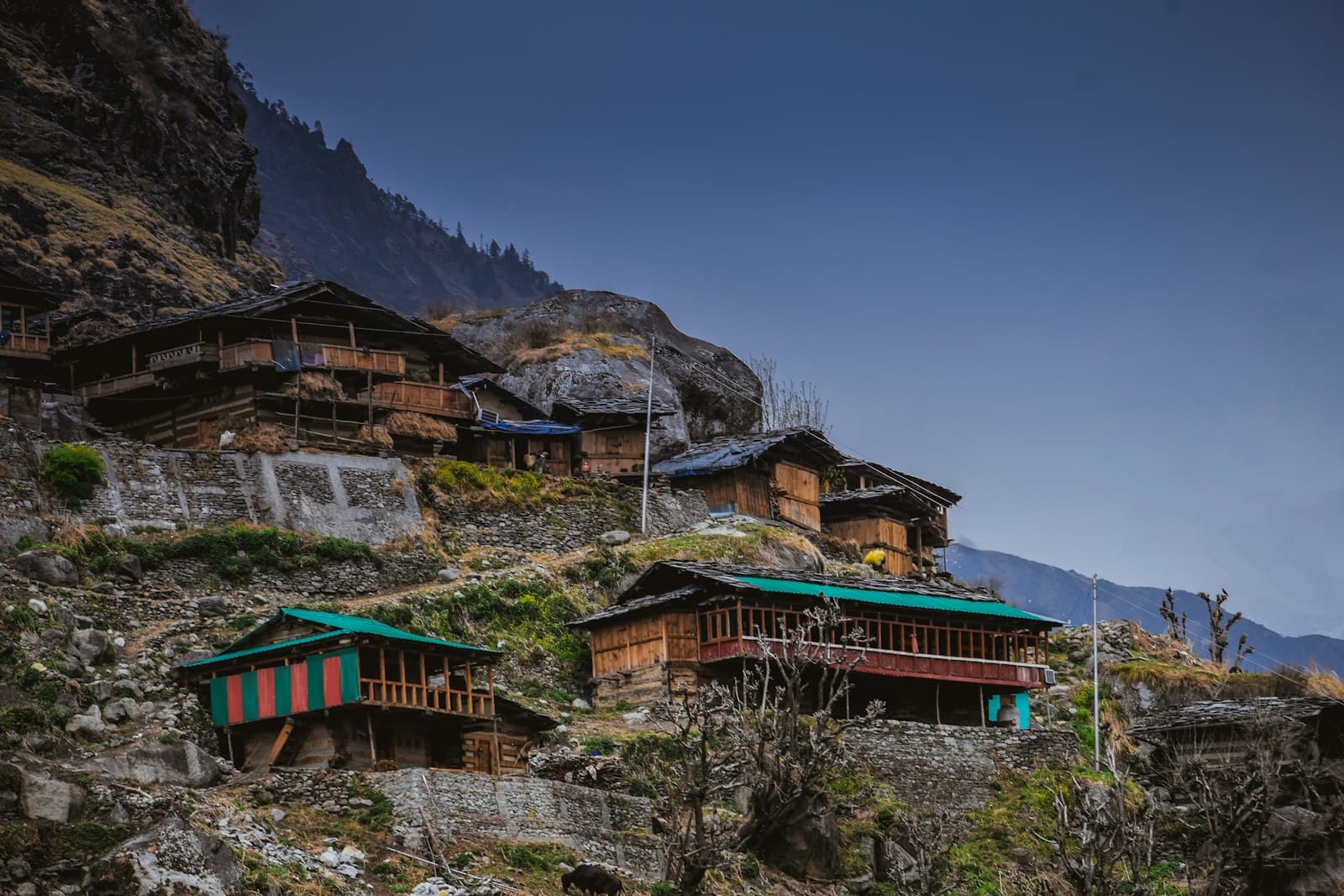
On almost every plot around Bhimtal, Bhowali, Ramgarh and Nainital, part of the budget goes into holding the hill back. Retaining walls are not glamorous, but they protect your house, your neighbour's house and the road. When they fail, it is nearly always during the monsoon, and nearly always because of water.
Types of retaining wall
| Type | How it works | Where it suits |
|---|---|---|
| Dry stone wall | Stones laid without mortar; weight holds the soil, gaps let water out | Low terrace walls, gardens, paths |
| Stone masonry in cement mortar | A heavy gravity wall, thicker at the base | Moderate heights, where good stone is available |
| Gabion wall | Wire-mesh boxes filled with stone; flexible and free-draining | Along streams and roads, soft or wet ground |
| RCC cantilever wall | Reinforced concrete stem on a wide base slab | Taller walls, tight plots, walls that are part of the house |
Which type is right depends on the height, the soil, the water and what sits above the wall. A tall wall, or one with a house, road or parking above it, needs an engineer's design, not a rule of thumb.
Why retaining walls fail
- Water trapped behind the wall. Saturated soil pushes far harder than dry soil.
- No weep holes, or weep holes blocked with soil because there is no filter behind them.
- A foundation on loose fill or debris instead of firm ground.
- A wall too thin for its height, or built higher later without redesign.
- Extra load above the wall: a new house, a road or parked vehicles.
- Digging at the toe of the wall for a path or a neighbour's foundation.
Drainage is the design
- Weep holes through the wall at regular spacing, sloping outwards.
- Free-draining backfill (graded stone and gravel) behind the wall, so water reaches the weep holes instead of building up.
- A catch drain along the top to intercept water running down the slope.
- A drain along the toe to carry the water away, not onto the next plot.
- Roof and courtyard water piped away from the backfill.
Walls and your house
When a floor is built below road level, which is common on plots along the Bhowali and Kainchi roads, the back wall of the house becomes a retaining wall. It has to be designed for soil and water pressure and waterproofed from the outside; plaster on the inside will not stop seepage. Where possible, keep a gap between free-standing retaining walls and the house structure. See designing a house on a sloping plot.
Retaining walls must also be safe when the ground shakes. Nainital district is in a high seismic zone; here is what earthquake-safe construction means.
Plan them from the survey
How many walls you need, how high and where, comes straight from the level survey. On steep plots near the lakes, walls and drainage are also part of what the authority looks at. See building near Bhimtal, Naukuchiatal or Sattal lake.
Timing and cost
Build retaining walls before the monsoon and never leave a cut slope open through the rains. Here is how to plan the building season in Nainital and Bhimtal. Walls can be a large share of the budget on steep land, so make sure they are itemised in your estimate. See what decides construction cost in Nainital and Bhimtal.
We design and build foundations and retaining walls for sloping plots as part of our building construction service. Send us photos of your slope on WhatsApp for a first view.
Common questions
Which retaining wall is best for a hill plot?
It depends on the height, soil, water and what sits above. Dry stone suits low terraces, stone masonry and gabions suit moderate heights, and RCC walls suit tall walls or walls that form part of the house. Tall or loaded walls need an engineer's design.
What are weep holes in a retaining wall?
Openings through the wall that let water behind it drain out. With a gravel filter behind them, they stop water pressure building up, which is the main cause of retaining wall failures.
Why do retaining walls fail in the monsoon?
Rain saturates the soil behind the wall, which greatly increases the pressure on it. Without drainage, the wall is pushed out or overturned.
 [S-02] Related serviceBuilding ConstructionHouses and buildings constructed on hill plots, from foundation to finishing.
Questions about your own plot?
Ask on WhatsApp